Let’s talk about something that has probably scared more than a few homebuyers and sellers over the years.
The dreaded VA appraisal. 😱
Okay, I’m being a little dramatic.
But if you’ve ever heard someone say, “Oh, you don’t want to accept a VA offer. Those appraisals are impossible!” then you know exactly what I’m talking about.
VA appraisals have developed quite a reputation, and unfortunately, a lot of that reputation comes from outdated information, misunderstandings, and stories that get repeated long after the rules have changed.
So let’s clear the air.
Because a VA appraisal isn’t something buyers or sellers should automatically be afraid of.
First, What Is a VA Appraisal?
When someone purchases a home using VA financing, a VA-approved appraiser evaluates the property.
The appraisal serves two primary purposes:
- Estimate the property’s market value. The lender needs to know that the home provides adequate security for the mortgage.
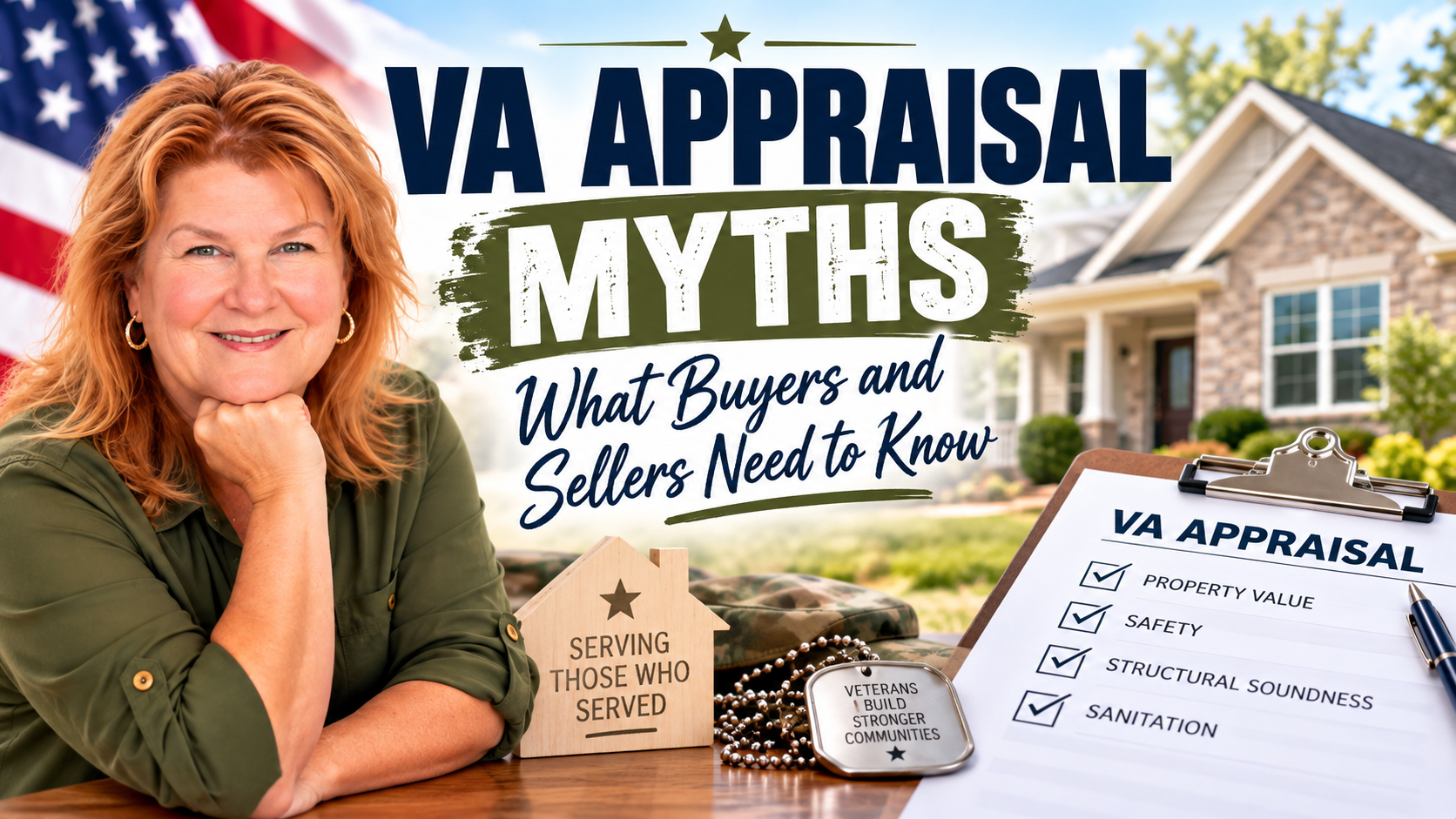
- Evaluate applicable Minimum Property Requirements (MPRs). These requirements help ensure that the home meets basic standards for safety, structural soundness, and sanitation.
That second part is where a lot of the confusion starts.
But before we dive into the myths, let’s get one important thing straight:
A VA appraisal is NOT a home inspection.
We’ll talk more about that in a minute.
Myth #1: VA Appraisers Are Looking for Reasons to Fail a House
⛔FICTION!
A VA appraiser isn’t showing up with a clipboard, a magnifying glass, and a mission to ruin everybody’s day. 😂
The appraiser’s job is to provide an independent opinion of value and identify readily apparent conditions that may not meet VA property requirements.
They’re not there to demand that every house look brand new.
The VA’s Minimum Property Requirements focus on whether a property is generally safe, structurally sound, and sanitary.
That can include concerns such as significant structural problems, unsafe electrical conditions, or hazards affecting the property’s use and safety.
But normal wear and tear? That’s a different story.
The VA’s updated guidance specifically distinguishes minor cosmetic concerns and ordinary wear from conditions requiring repairs.
A house doesn’t have to be perfect to qualify for VA financing.
Myth #2: Every Little Cosmetic Issue Has to Be Fixed
⛔FICTION!
This might be one of the most persistent VA appraisal myths.
Some people imagine an appraiser demanding repairs because the kitchen is outdated, the carpet has seen better days, or a bedroom could use a fresh coat of paint.
But VA requirements aren’t about whether the home matches somebody’s Pinterest board!
A dated kitchen isn’t automatically a safety hazard.
An older bathroom isn’t automatically unacceptable.
And cosmetic imperfections don’t necessarily prevent a home from qualifying.
What matters is whether the property’s condition creates a problem under the applicable VA requirements.
Now, that doesn’t mean peeling paint, moisture damage, or deteriorated building materials can never become an issue. Some conditions may involve safety, structural, sanitation, or other requirements that need attention.
But there’s a big difference between a cosmetic issue and a legitimate property concern.
And that’s exactly the distinction we want buyers, sellers, and agents to understand.
Myth #3: A VA Appraisal Is the Same as a Home Inspection
⛔FICTION!
And this one is important.
A VA appraisal and a professional home inspection serve different purposes.
A VA appraisal provides an opinion of value and addresses readily apparent issues related to VA Minimum Property Requirements.
A home inspection is a more detailed examination of the property’s physical condition. A qualified inspector may evaluate systems and components such as roofing, plumbing, electrical systems, heating and cooling, and other areas of the home.
A VA appraiser does not perform the same comprehensive checks as a home inspector.
Here’s the key difference: The appraisal is primarily for the lender, while the home inspection is for YOU, the buyer!
The appraisal helps the lender evaluate the property as security for the loan. The inspection helps YOU make an informed decision about the home you’re purchasing.
So even if a home satisfies VA appraisal requirements, that doesn’t guarantee the home is free of defects.
I strongly encourage buyers to consider a professional home inspection, regardless of which mortgage program they’re using.
Buying a home is a big investment. You deserve to know as much as reasonably possible about what you’re purchasing.
Myth #4: If the VA Appraisal Calls for Repairs, the Deal Is Dead
⛔FICTION!
Sometimes a VA appraisal identifies conditions that need to be corrected before the loan can close.
That doesn’t automatically mean the transaction is over.
Depending on the issue, there may be a straightforward repair that brings the property into compliance.
The important questions become:
- What specifically needs to be repaired?
- Who will arrange or pay for the repair?
- Can the repair be completed within the transaction timeline?
- What documentation or follow-up verification will the lender require?
Some situations are simple. Others require more coordination.
And certain significant property problems may make a transaction impractical or ineligible.
But I don’t believe in declaring a deal dead before we’ve actually evaluated the problem.
This is where a knowledgeable mortgage team, a good real estate agent, and communication can make a tremendous difference.
Myth #5: The Seller Has to Pay for Every VA Appraisal Repair
⛔FICTION!
People sometimes assume that if an appraiser identifies a repair, the seller is automatically required by the VA to pay for it.
That’s not how every transaction works.
Who pays for an allowable repair can depend on the purchase contract, negotiations between the parties, applicable program requirements, and lender approval.
Sometimes the seller agrees to complete the work.
Sometimes the parties negotiate another permitted solution.
And sometimes the buyer decides the property isn’t the right fit.
The important thing is that any required work is addressed appropriately and the transaction meets applicable requirements before closing.
Sellers shouldn’t assume that accepting a VA offer automatically means taking responsibility for every possible repair.
Myth #6: VA Appraisals Always Come in Low
⛔FICTION!
There is no rule requiring a VA appraiser to value a property below its contract price.
A VA appraiser develops an independent opinion of market value based on the property, comparable sales, market conditions, and accepted appraisal practices.
But here’s something a lot of buyers, sellers, and even real estate agents don’t know about.
VA loans have a special process called the Tidewater Initiative!
What Is the VA Tidewater Initiative?
Let’s say you’re buying a home for $250,000.
The VA appraiser is working on the appraisal and realizes that the available sales data may not support that purchase price.
Here’s where Tidewater comes in.
Before the appraisal is finalized, the VA appraiser notifies me, as the lender, that additional market data may be needed to support the contract price.
That’s when I work with the real estate agents to gather any additional comparable sales or relevant market information. We have two business days to submit that information for the appraiser’s consideration.
The appraiser reviews that information before completing the report.
Now, that doesn’t mean the appraiser has to change the value. And it certainly doesn’t guarantee the house will appraise for the purchase price.
But it creates an opportunity to provide additional market evidence BEFORE the appraisal is finalized.
And that is a pretty valuable opportunity!
What If the Appraisal Still Comes in Low?
Even after Tidewater, the appraised value may be below the purchase price.
That doesn’t necessarily mean the transaction is over.
Depending on the circumstances, the buyer may have several options:
- Request a Reconsideration of Value (ROV). After the appraisal is completed and the Notice of Value is issued, the veteran can request a formal review supported by relevant market data.
- Renegotiate the purchase price. The buyer and seller may agree to a different price.
- Pay the difference. If the buyer has sufficient funds and meets the applicable loan requirements, paying the difference may be an option.
- Use applicable contract protections. Depending on the circumstances, the VA escape clause and purchase agreement may allow the buyer to avoid proceeding with a purchase above the established value.
And here’s the distinction I really want you to remember:
Tidewater happens BEFORE the appraisal is finalized.
Reconsideration of Value happens AFTER the appraisal is completed and the Notice of Value has been issued.
Two different opportunities to address concerns about value.
So when someone tells you that a low VA appraisal automatically kills a transaction, remember that there may be options worth exploring before everybody throws in the towel!
This is another reason I love working closely with Realtors throughout the loan process. When the lender and agents communicate, we can make sure supporting market information gets submitted through the proper channels and within the required time frame.
Myth #7: VA Appraisals Take Forever
⛔FICTION!
VA appraisal timelines vary by location, appraiser availability, property type, workload, and the complexity of the assignment.
But a VA appraisal isn’t automatically a drawn-out ordeal. In fact, most of the ones I have done have been about the same time as a regular conventional or government loan program appraisal time frame.
As with any mortgage transaction, getting the appraisal ordered promptly, responding to questions quickly, and communicating clearly can help keep things moving.
Sometimes delays occur because of repairs, additional information requests, unusual property conditions, or scheduling challenges.
The same sorts of issues can affect other financing programs.
My approach is simple: anticipate what we can, communicate about what we can’t, and address potential obstacles early.
Myth #8: Older Homes Can’t Qualify for VA Financing
⛔FICTION!
We have some wonderful older homes here in Oklahoma.
And a home doesn’t automatically become ineligible for VA financing just because it was built decades ago.
Age alone isn’t the deciding factor.
Condition matters.
An older home that’s well maintained may be a perfectly reasonable candidate for VA financing.
On the other hand, a newer home can still have safety or structural issues.
The real question is whether the property meets the applicable requirements.
And yes, some older-home issues may need a closer look—especially where deteriorated materials, water damage, or other hazards are involved.
But don’t count out a beautiful older home just because somebody tells you, “The VA won’t finance that.”
Let’s look at the actual property first. Again, this is where experience matters.
Myth #9: The Lender Gets to Pick the VA Appraiser
⛔FICTION!
I wish I had a magic button that let me choose exactly who appraises every property, but that’s not how VA appraisals work! 😂
VA appraisers are assigned through the VA’s appraisal system, using its approved roster and assignment procedures.
As your lender, I order the appraisal, but I don’t get to handpick an appraiser just because I think they’ll give us the value we’re hoping for.
And that’s intentional.
The appraisal is supposed to provide an independent opinion of the property’s value.
If we have concerns about the value, there are established processes—like the Tidewater Initiative and Reconsideration of Value—for submitting additional market information.
The answer isn’t simply shopping around for an appraiser who will give us a different number.
A good lender doesn’t need to control the appraisal. We need to understand the process and know how to navigate it when questions arise.
Myth #10: Sellers Should Reject VA Offers Because of the Appraisal
⛔FICTION!
And this is the one I especially want real estate agents and sellers to hear.
A VA offer should be evaluated on its actual merits—not rejected because of rumors about the loan program.
Consider the buyer’s qualifications, the contract terms, the property’s condition, and the mortgage team’s ability to communicate and work through the transaction.
A property with major safety or structural problems may present challenges for VA financing.
But that doesn’t mean every VA appraisal creates a problem.
And it certainly doesn’t mean every VA buyer is a risky buyer.
Our veterans have earned their home loan benefits. They deserve to have their offers considered fairly.
A Quick Word About the VA’s Updated Appraisal Requirements
VA made updates to its Minimum Property Requirements effective in May 2026, including changes intended to remove outdated requirements and reduce unnecessary delays and expenses.
That matters because some of the horror stories people still repeat are based on older rules or practices.
But I also want to be careful here: Updated guidance doesn’t eliminate the need for a safe, sound, and sanitary property.
Every home and every transaction still needs to be evaluated on its own facts.
You can read more in the VA’s official announcement about its updated appraisal requirements.
My Advice for Buyers, Sellers, and Real Estate Agents
Whether I’m helping a veteran buy a home or working with an agent who’s considering a VA-financed offer, I always come back to the same idea:
Ask questions before making assumptions.
If you’re a buyer, don’t assume a home won’t qualify just because it’s older or needs a little work.
If you’re a seller, don’t assume VA financing is automatically more difficult.
And if you’re a real estate agent, let’s talk through any property concerns before they become last-minute surprises.
Not every property will be a fit for every loan program.
But an informed decision is always better than one based on an outdated myth!
Have Questions About VA Financing?
If you’re considering buying a home with your VA benefit—or you’re a real estate agent with questions about whether a particular property could qualify—I’d love to help.
Let’s look at the details and build a plan that makes sense.
Or call or text me at 918-316-7237.
Keep Exploring VA Home Loan Resources
Visit my VA Home Loan Resource Center for more articles, videos, and practical guidance.
You can also explore:
Lisa Pinnick | Senior Mortgage Loan Officer | All Western Mortgage | NMLS #1810532
All financing is subject to VA eligibility, credit approval, property requirements, and applicable lender guidelines. All Western Mortgage is not affiliated with or endorsed by the U.S. Department of Veterans Affairs. Additional company and licensing disclosures may apply.
Published October 2026. VA guidance and lender requirements are subject to change.