
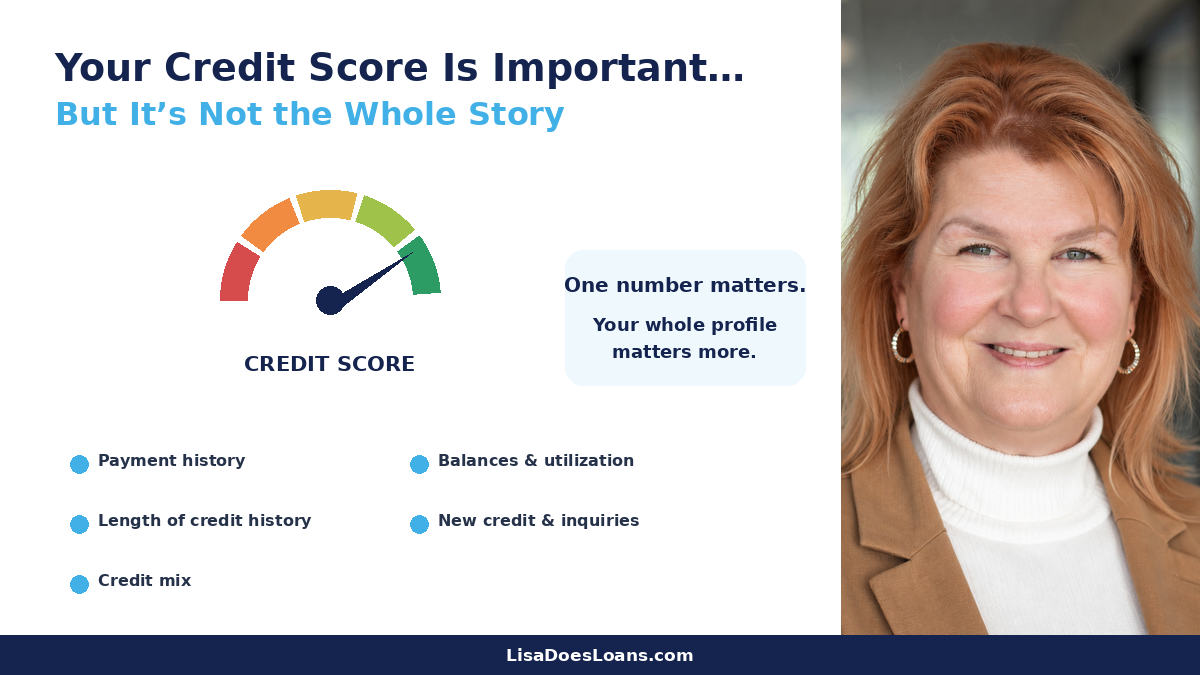
Worried Your Credit Isn’t Good Enough to Buy a Home?
One of the most common things I hear from people who are thinking about buying a home is:
“I wasn’t sure my credit was good enough.”
And I understand why.
Credit can feel confusing, especially when you see one score on an app, another number somewhere else, and a whole lot of conflicting advice online.
The good news is this:
Your credit score for buying a home matters, but it is not the whole story.
Mortgage lenders look at your overall credit profile, including how you have handled debt over time, your payment history, balances, recent credit activity, and how all of that fits together with the rest of your financial picture.
So let’s break it down in plain English.
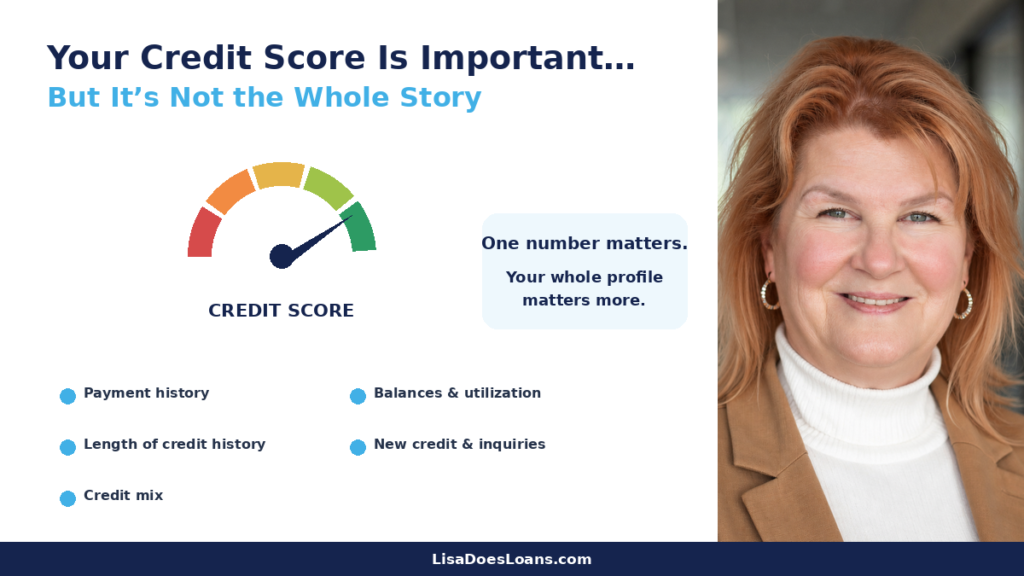
You do not need perfect credit to buy a home. Mortgage qualification depends on your credit profile, loan program, income, debts, assets, and overall financial picture. The credit score you see in a consumer app may also differ from the score used for mortgage qualifying.
What Is a Credit Score?
Your credit score is a three-digit number that summarizes information found in your credit report.
In general, stronger credit can help you qualify for more loan options and potentially better pricing. But there is not one universal score that determines whether you can or cannot buy a home.
Different loan programs have different guidelines, and the rest of your financial profile matters too.
That is why I do not want buyers looking at one number and deciding for themselves:
“I can buy.”
or
“I definitely cannot buy.”
There is usually more to the story.
Why Is My Mortgage Credit Score Different From the Score on My App?
This surprises a lot of people.
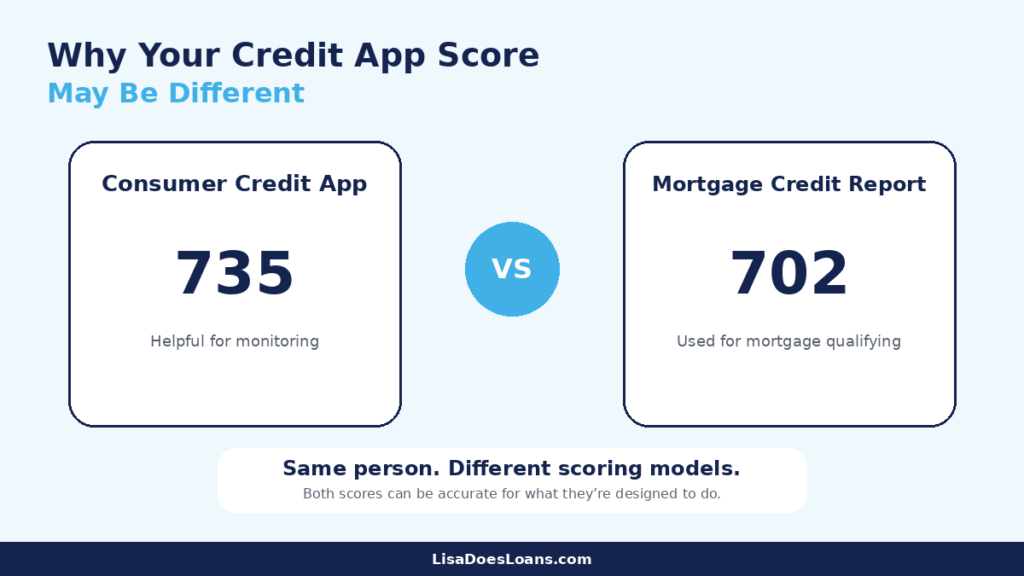
The score you see in a consumer credit app may not be the exact same score used for mortgage qualifying.
Credit apps can be very helpful for monitoring trends and keeping an eye on your credit, but mortgage lenders may use different credit reports and scoring models for mortgage purposes.
So if the score your lender sees is a little different from what you expected, that does not automatically mean anything is wrong.
It usually means you are looking at different scoring models.
This is one of the biggest reasons I encourage buyers not to rely only on an app when deciding whether they are ready to buy.
What Affects Your Credit?
Several major factors can influence your credit profile.
Payment History
Paying your bills on time is one of the most important things you can do for your credit.
Late payments can have a significant impact, especially when they are recent.
If you are preparing to buy a home, make every effort to keep all payments current.
Credit Utilization
Credit utilization is the amount of revolving credit you are using compared with the amount available to you.
For example, if you have a credit card with a $5,000 limit and a $4,500 balance, your utilization is high.
In general, lower utilization is better for your credit profile.
There is no single magic percentage that guarantees a certain score, but paying revolving balances down can often help.
Length of Credit History
Credit scoring also considers how long your accounts have been open.
Older, well-managed accounts can help show a longer history of responsible credit use.
New Credit and Inquiries
Opening several new accounts in a short period of time can affect your credit.
That is one reason I recommend avoiding unnecessary new credit while you are preparing to buy a home.
Credit Mix
Your credit profile may include different types of accounts, such as credit cards, auto loans, student loans, and mortgages.
The mix of credit is one part of how scoring models evaluate your overall history.
What Does a Mortgage Lender Actually Look At?
When I review a borrower’s file, I am not looking at credit in isolation.
I am looking at the whole picture.
That includes:
- your credit profile
- your income
- your monthly debts & debt-to-income ratio
- your assets
- your employment and income stability
- your loan program
- the payment you are trying to qualify for
A lower credit score does not automatically mean no.
A higher score does not automatically guarantee approval either.
The goal is to understand how everything fits together.
If mortgage terminology starts to feel like a foreign language, I’ve put together a plain-English Mortgage Terms guide to help.
Be Careful With Credit Advice Before Applying
One of the biggest mistakes buyers make is trying to “fix” their credit based on random advice before talking with a lender.
For example:
- closing credit cards
- opening new accounts
- paying off certain debts in the wrong order
- moving balances around
- financing a vehicle
- co-signing for someone else
Any of those things can affect your credit or mortgage qualification in ways you may not expect.
So before making major credit changes, talk with your lender.
Sometimes the move that sounds smartest is not actually the best move for your mortgage strategy.

What If My Credit Is Not Ready Yet?
This is where I really want buyers to hear me:
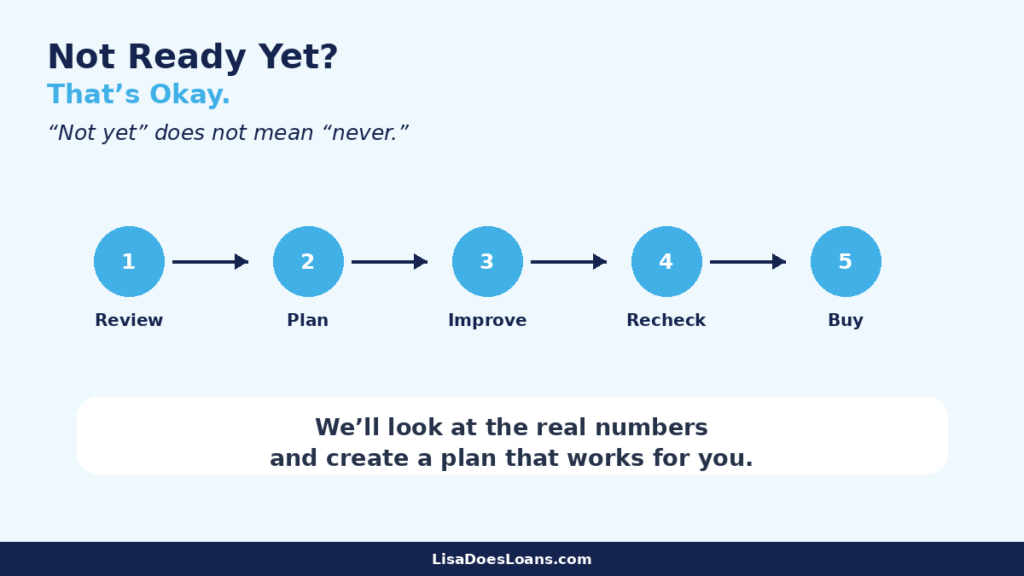
Not yet” does not mean “never.
Sometimes a buyer is ready immediately.
Sometimes we need to work on a few things first.
That may mean paying down balances, getting current on accounts, correcting inaccurate information, building a little more history, or simply giving the credit profile time to improve.
The important thing is to know what actually needs attention instead of guessing.
I would much rather review your situation early and help you build a plan than have you wait a year because you assumed you were not ready.
A Few Smart Credit Habits
If you are thinking about buying a home, these are good habits to focus on:
- Pay your bills on time.
- Keep revolving balances as manageable as possible.
- Avoid opening unnecessary new credit.
- Review your credit reports for errors.
- Do not make major financial changes without checking with your lender first.
- Start the conversation early.
The earlier we look at your credit, the more options we have to build a plan.
Your Credit Does Not Have to Be Perfect
This is probably the most important thing I can tell you.
You do not need perfect credit to become a homeowner.
You need a credit profile that works with the right loan program and the rest of your financial picture.
And sometimes the difference between “not ready” and “ready” is much smaller than people think.
So please do not let fear of your credit score keep you from asking the question.
Let’s look at the real numbers.
If you are ready, great.
If you are not ready yet, we can build a plan.
Either way, you will know where you stand and what the next step should be.
Ready to Talk?
If credit is the part of homebuying that has been making you nervous, let’s talk about it.
No judgment. No guessing. We will look at the whole picture and figure out the next step.
📱 Call or text: 918-316-7237
🗓️ Schedule a free discovery call or APPLY NOW:
The goal is not to judge your credit.
The goal is to understand it, make a plan, and help you move toward homeownership with confidence.